Showing posts with label Jim Dobbin. Show all posts

Monday, 26 September 2011

Nadine Dorries & ‘Right to Know’: How Not To Run A Parliamentary Campaign

I will say this for Nadine Dorries: by watching her you can soon learn how not to effect constructive change in Politics. We only have to consider her most recent fiasco in trying to obtain counselling for women considering an abortion.

The purpose of her amendment to the Health and Social Care Bill was certainly a creditable and worthy aim, that most Pro-Lifers would support. And I, for one, would certainly take my hat off to her for the way in which she apparently withstood so many threats and such bullying. She is not a coward – and I know from experience what pro-abortionist aggression tactics are like. I have been involved in the abortion battle for over 40 years, and during the process of Bills seeking to tighten the Law, I was regularly subjected to frightening telephone calls at around midnight and in the early hours of the morning.
My office was broken into a number of times, and during the process of the James White (left) Bill in 1974/75, we had to take turns of sleeping on the office floor to protect our equipment throughout the summer months, because we were broken into so often. On another occasion – during the debates on the Enoch Powell Bill on Embryo Research – we had our office smashed up so badly that the BBC actually made it the first item on their evening news programme.

Far worse, when John Corrie (right) introduced his Bill to amend the abortion law, his family had to withstand the most dreadful harassment. He was a sheep farmer, and lived with his family in a Scottish farm house. His wife was heavily pregnant at the time, and throughout the night she had regular menacing calls until she became absolutely petrified of what might happen to her and her other children.

Nonetheless, much as I sympathise with Mrs. Dorries over the bullying and threats, I have to say that her campaign has done the Pro-Life cause more damage than anything else in 40 years. Furthermore, it is the Pro-Life groups which are now being blamed for the whole fiasco. “What were the Pro-Life groups doing?”, people ask me, “Is it true that Pro-Life groups were not speaking to each other?” In fact, most of us were, and what makes it so infuriating is that the whole thing could have been avoided.

When I first spoke to Mrs. Dorries, she promised that she would consult on the wording of the amendment. In the event, however, she acted behind the backs of all the Pro-Life groups with the exception of one. The rest of us did not see the original draft until she had published it. I immediately made it quite clear that, although we were very anxious to support her, we considered the amendment, as drafted, a hostage to fortune. We explained that we would not organise any kind of grass-roots lobby unless considerable changes were made – the least of which was the need to ensure that the counselling work of LIFE and CARE Confidential would not be blocked, as was a danger with the original draft.

On April 5, I wrote a letter to her explaining our thoughts and stressing that we still very much wanted to support her. I made it clear that RTL considered that any Bill/amendment should concentrate on the information which women should be entitled to receive when considering an abortion. That is the basis of informed consent legislation in Germany and America which has been so successful in bringing down the numbers of women having their pregnancies terminated.

Unfortunately, Mrs. Dorries seemed to think that a website and a publicity campaign, getting newspaper-headlines, would be enough to secure victory. In all my experience, I have never known such a badly run campaign and – above all – one in which the MPs presenting Bills/Amendments did not closely consult their Parliamentary colleagues, showing them the basic respect they are due.

She seemed satisfied to gain the support of Frank Field, the Labour MP, who is profoundly pro-abortion. I well remember the manner in which he whipped Labour colleagues to vote against the Corrie Bill and from the moment I heard he was involved, I predicted that he would not be there when it came to the final scenario. In fact, I wish that I had placed a bet with William Hill: I could have made money for RTL!

One of the problems with Mrs. Dorries and the  Christian lobby group with which she was involved (and which shall remain nameless) is that they know nothing whatsoever about grass-roots lobbying, in which I have gained 40 years' experience. I understand very well how to get “bums on seats” at public meetings and how to get people to swamp MPs with letters on an issue. It is very hard work, and costly, and it takes time to organise. The fact that even the All Party Parliamentary Pro-Life Group did not know until the very end that she had accepted their suggestions is an indication of the contempt she appears to have for colleagues, as well as (quite evidently) for mainstream Pro-Life groups.

The result was a total lack of any grass-roots lobby campaign as could be seen by the lack of mail MPs received from their constituents. And swamping MPs with individual, personal letters from their constituents is the most important factor in any political campaign! Most MPs take far more notice of letters from voters than they take notice of headlines. One MP who usually has shoals of letters and telephone calls told me on day before the debate that he had received one telephone call and two letters throughout the whole campaign.

During the time that we were trying to persuade Mrs. Dorries to accept some changes, supportive MPs begged Pro-Life colleagues (who had become extremely concerned) that nobody should publicly criticise her. Because of our respect for the parliamentarians involved, RTL made no public comment throughout the campaign – although we did tell our members and others not to write to their MPs urging them to support the amendment, due to its potential dangers.

The only time there was even the vaguest attempt to “consult” (as had been promised from the beginning) was when Mrs. Dorries’ office sent an e-mail to Jim Dobbin MP and to me one night (after my secretary and helpers had left the office). She asked if we could attend a meeting the next morning at around 9.30. We were told than an eminent lawyer whom I respect greatly (and who shall also remain nameless) would also attend. I had a chest infection which made it very difficult for me even to walk and I had to e-mail her to say that I could not attend. It was too late, even, to find somebody to represent me. In addition, it was after 22:30 that night when I finally got hold of Jim Dobbin. He had to attend a Select Committee meeting the next morning and it was impossible for him to go along.

Subsequently, I received an e-mail from Mrs. Dorries telling me that the lawyer-who-shall-remain-nameless considered her amendment would achieve all we wanted. I was thunderstruck, and when I contacted him he told me that he did not wish to become involved in ”squabbles”  between Pro-Life groups. I felt this was very sad, especially after the leading political groups had worked so hard to co-operate. However, he sent an e-mail to all of us listing the points he had made and from which it was clear to everybody that he certainly had not claimed the amendment achieved all we wanted.

A further attempt was made to negotiate with Mrs. Dorries, concentrating mainly on ensuring that the counselling work of LIFE and CARE would not be blocked. Finally, only a few days before the debate, she agreed to adopt the amended clause – by which time it was far too late to organise any kind of grass roots lobby urging MPs to back the amendment. But even that was not the final act in the drama.

Anybody watching the debate must have wondered what was happening to make MPs – looking for all the world like Epsom Racecourse Bookmakers – start to tick-tack each other. However, at one stage during her overlong speech (which allowed hardly any Pro-Life MP to speak) it appeared that Mrs. Dorries was going to introduce the original amendment which Pro-Life MPs had made clear they would not support. This was cleared up by colleagues around her – and a little more tick-tacking gave the “go-ahead” to Pro-Life MPs!

However, by that time a very high number of groups and MPs were more than a little tired of Mrs. Dorries. A considerable number of sympathetic MPs abstained from the vote and a number actually voted against her.

I personally can see no justification for them voting against her; the amendment simply sought to sever the links between money-making clinics (whether they describe themselves as charities or not) and counselling services. It certainly did not achieve what RTL had wanted, but it satisfied the needs of both LIFE and CARE. The empty gesture by SPUC writing to all MPs urging them to vote against the amendment was ludicrous, adding a farcical note to what was already a ridiculous scenario. It did nothing to help the situation and simply gave pro-abortion MPs grounds for ridiculing the lobby. It certainly did not influence any true Pro-Lifer.

However, not only did the whole Dorries campaign dismay her parliamentary colleagues and Pro-Life groups, it also gave Andrew Lansley (the Health Secretary) the opportunity to introduce to the Conservative Party  whipping by the back door on a Pro-Life issue. In a letter to all Conservative MPs, Ann Milton (Mr Lansley’s junior minister) made it clear that the Department of Health was opposed to Mrs. Dorries’s amendment. In comparison, previous Conservative Government Ministers have explained reasons why the Department of Health might be concerned about amendments: they have never before expressed opposition as Department policy. Surely, Department policy means Government policy. Moreover, we have heard from a number of MPs that some of the Conservative Whips used the letter in seeking to persuade them to vote against the Dorries amendment.

To my mind, this can only be described as a hole-in-the-corner method of back-door whipping.  It hardly reflects the previous integrity of the Party on the issue. For over forty years, the Conservative Party has maintained a proud tradition – protecting a free conscience vote on all votes to do with Life issues. Thankfully, the Rt. Hon. Dr. Liam Fox MP (the Defence Secretary) and Stewart Jackson MP both issued statements making it public that they had no intention of following Mrs. Milton. Other Government Ministers, such as John Hayes and Alistair Burt, stood with them.

However, we need to go back in history when discussing Mr. Lansley.

Before the General Election, Right To Life (with CARE and LIFE) sent a joint letter to David Cameron (then Opposition Leader) expressing our concern about the manner in which Mr. Lansley was abusing his position as Shadow Health Minister, in promoting abortion on demand and calling for a change in the law to allow abortion on the agreement of only one doctor (instead of two as at present).  We reminded Mr. Cameron that previous Conservative Governments had always held a neutral position on abortion amendments.

In his reply, he defended Andrew Lansley on the grounds that the Conservative party always maintained a free vote on Life issues and assuring us that the party had most certainly not changed its position: Mr Lansley – he told us – was as much entitled to exercise his right of conscience as was any Conservative MP. We accepted that.

However, Anne Milton’s letter to all Conservative MPs changed the situation radically. It  made clear that the Department of Health was opposed to Mrs. Dorries’s amendment.

In comparison, previous Conservative Government Ministers have explained reasons why the Department of Health might be concerned about amendments: they have never before expressed opposition as Department policy – and, surely Department policy means government policy. Moreover, we have been told by a number of MPs that some of the Tory Whips used the letter in seeking to persuade them to vote against Dorries. It was a “first-time” for Tory Whips and hardly reflects the previous integrity of the Party on the issue.

The only time in the past that a Conservative Government whipped on an abortion amendment was in 1990. A group of Labour MPs sought to introduce an amendment to the Human Fertilisation & Embryology Bill (now Act) to extend the 1967 Abortion Act to Northern Ireland.  Consequently, the Northern Ireland MPs of all parties asked for a joint meeting with Lady (then Mrs.) Thatcher when they stressed that all the political groups, the churches and a huge majority of the people in Northern Ireland, were opposed to the current abortion law. They urged that it should be left to the people of the Province to decide whether they wanted to change the law or not.

Lady Thatcher said it was the first occasion on which she had known the NI Parties to unite on any issue. Consequently, out of deference to the democratic rights of the people of the Province, the Government adopted an official policy opposing the Labour amendment and Conservative MPs were whipped. However, it was perfectly straightforward; unlike the back-door whipping we saw on the Dorries amendment.

Margaret Thatcher was never my “bowl of goulash”, if you understand what I mean! Moreover, she certainly was not sympathetic to the pro-life cause. She voted for the Abortion Act in 1967 and subsequently always supported it. However, to be just, she had a great respect for the conscience vote of her MPs – and never allowed any Ministers or their officers to conduct themselves as we saw on the Dorries campaign. In addition, although she was straightforward about her views, at no time did she ever seek to influence her MPs by announcing how she would vote on an amendment. (As a footnote, I would add that in her memoirs and in speaking publicly, Lady Thatcher has said that she considers she made a tragic mistake in supporting liberal abortion.)

The Conservative Party conscience vote on life issues continued to be protected throughout the Leadership of John Major, William Hague, Iain Duncan Smith and, even, Michael Howard. It is tragic that Mr. Cameron seems to be changing the party tradition. It is essential that people write to him expressing concern about the Conservative Conscience vote on Life issues. That we must seek to protect at all costs.

Tuesday, 24 May 2011

"What price, democracy?" The Case for Early Day Motions

I am pretty tolerant when it comes to MPs and their problems. For example, I think many MPs had a pretty raw deal when the Daily Telegraph ran its campaign on parliamentary expenses, the obvious aim being to promote the paper’s circulation and its advertising revenue. And some of the MPs for whom I had the most sympathy included those whose objectives I disliked intensely. However, more on that another time…
The reason I mention it now is because there are other aspects of MPs’ work which frankly make me almost go ballistic. One is receiving letters from MPs (or copies of letters from MPs to constituents) saying why they refuse to sign Early Day Motions: “…they are very costly and they quote figures amounting to anything from £100,000 per EDM to over a £1,000,000 for the whole year… EDMs are not debated… the system is abused and some EDMs are ludicrous...”
These replies are coming from new MPs who, in fact, often show very little understanding of the processes of Parliament and how to use them.
In forty years, I have never known of anybody asking an MP to table an EDM who imagined it would be debated. Parliament’s own website makes this clear, and explains some aspects of using them:
“EDMs are used for reasons such as publicising the views of individual MPs, drawing attention to specific events or campaigns, and demonstrating the extent of Parliamentary support for a particular cause or point of view…. although there is very little prospect of EDMs being debated, many attract a great deal of public interest and frequently receive media coverage.”
Moreover, the parliamentary website gives a clear indication of the cost of EDMs which bear no relation to the exorbitant figures quoted by MPs. Under ‘Frequently Asked Questions: Business’ it states:
What is the average cost of an Early Day Motion (EDM)?
£290 (estimated figure for 2005-06).
The unavoidable fact is that EDMs are one of the few ways in which back-benchers can openly and affectively criticise what is happening in Parliament, and ensure that it is on the public record. This, on some occasions, can be displeasing to Ministers and to the Government itself. Hence our present problems and difficulties with a number of new Conservative MPs, who have been persuaded by Whips to refuse to sign all EDMs, generally quoting the cost.

One must ask “What price democracy… £290…??”

However, the MPs invariably write very friendly letters, assuring us that they will write to the Minister on behalf of the correspondent asking him/her to explain!

Frankly, most letters to Ministers and the replies are pretty useless. They not only keep any given issue “under wraps” (away from public scrutiny), but they also keep the MPs’ views and intentions out of sight of constituents. In any case, usually the response is written by a Civil Servant whose very duty it is to defend the status quo and the Minister! Moreover, on the subject of costs – think of the tens of thousands it must cost to have civil servants writing fatuous replies to provide smoke screens!
What About Parliamentary Questions?
Shortly after the last General election, I had the idea of returning to a tactic we used some years ago to good effect.
A number of MPs, of different parties, were asked to put their names into the ballot to table Parliamentary Questions (PQs) to the Secretary of State For Health (Andrew Lansley, see right) on the policy of distributing the morning after pill to under-age girls – which has seen such an increase in Sexually Transmitted Infections among adolescents. Other MPs were prepared to be in the House when Question Time came, so that we could have a meaningful debate with relevant facts and figures recorded in Hansard.
However, we fell at the first fence – not one of our MPs had their names pulled out of the ballot!
And it is through the Ballot that most other procedures are open to back-bench MPs… Private Members’ Bills… Oral PQs… Adjournment Debates… Westminster Hall debates… Ten-Minute Rule Bills… Almost the only exceptions are Early Day Motions and Written PQs. The latter can be very useful – but  they are not open to debate, and neither do they have the impact of EDMs which can be used to educate parliamentary colleagues on any given issue, as well  as informing public discourse.
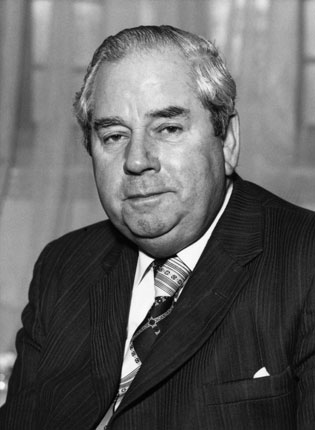
As Parliament’s own website makes clear, many EDMs attract a great deal of public interest and frequently receive media coverage. One example concerned the occasion when the Director of Public Prosecutions (DPP) first published his Guidelines for people involved in a friend/relative’s assisted suicide. Quite clearly, the Guidelines changed (de facto) the law. Immediately after publication, the Rt. Hon. Ann Widdecombe (then, still in Parliament – see below), tabled an EDM which resulted in front-page banner headlines supported by other leaders of the All-Party Parliamentary Pro-Life Group (APPPLG) such as Jim Dobbin (see left). It accused the DPP of seeking to undermine the sovereignty of Parliament, and launched the All-Party Group’s campaign – and that resulted in the DPP back-peddling somewhat (although not entirely). No letter of protest to a Minister, or even to the Prime Minister, would have had such a result.

One of the Most Successful EDMs of all Time

To be truthful, Margaret Thatcher was never my favourite politician. However, whatever her failings may have been, she was far better than some of those who have followed her. For one thing, she had an enormous respect for Parliamentary Democracy. When she was Prime Minister, I know for a fact that she would bring EDMs which she thought to be important, to the attention of her Government Ministers.
In addition, she tabled what must have been one of the most successful EDMs of all time when she was Leader of the Conservatives opposing James Callaghan’s government. Her EDM simply said that the House had lost confidence in the Government, and called for it to resign. Virtually every Conservative MP, as well as some MPs of other Parties, signed the Motion. The EDM received tremendous publicity and Margaret Thatcher (confident of her support) took the next step. She tabled a Formal Motion of ‘No Confidence’ which was debated. James Callaghan lost the vote, and his Government had to resign, leading to the General Election of 1979 which Margaret Thatcher won with an overwhelming majority.
Some MPs may dislike Margaret Thatcher – but most have a respect for her. The fact that she recognised EDMs as a major plank in Parliamentary Democracy may make some of them at least think again. As has been discussed, ask MPs who quote the costs when they refuse to sign EDMs – “What price democracy?” And how much do they think it costs the nation to have civil servants writing replies to MPs letters to obscure the facts?
Below is EDM 1622 – which does not present the Department of Health or its Minister in a particularly favourable light. Bearing in mind that members of the Government or shadow Government usually do not sign EDMs, write to your MPs and urge them to give their signatures in support. Even if your MPs are Ministers or Shadow Ministers, please send them the Motion to draw their attention to the facts – which to say the least – are disreputable:

EDM 1622: CONSULTATION ON THE CARE OF WOMEN CONSIDERING INDUCED ABORTION

Date tabled: 17/03/2011

Primary sponsor: Dobbin, Jim.

Co-Sponsors: Benton, Joe; Coffey, Therese; Field, Frank; Glindon, Mary; Leigh, Edward

Total number of signatures: 24
Amess, David; Benton, Joe; Bruce, Fiona; Campbell, Ronnie; Coffey, Therese; Cunningham, Tony; Dobbin, Jim; Dodds, Nigel; Donaldson, Jeffrey; Dorries, Nadine; Durkan, Mark; Evans, Jonathan; Field, Frank; Glindon, Mary; Hamilton, Fabian; Leigh, Edward; Long, Naomi; Murphy, Paul; Pugh, John; Ritchie, Margaret; Rosindell, Andrew; Swayne, Desmond; Vickers, Martin; Walter, Robert.
“… this House notes that the Consultation Committee and Report of the Royal College of Obstetricians and Gynaecologists (RCOG) The Care of Women Requesting Induced Abortion fails in at least four criteria required by the Government Code of Practice; further notes that the Leader of the House has stated that the Government could not interfere because it was a RCOG Consultation Committee and not the responsibility of the Government (17 February 2011, Official Report, column 1145); further notes, however, that in the Answer to Lord Alton of Liverpool, Official Report, House of Lords, column WA425, the Government stated that the Department of Health commissioned and funded the review; further notes with grave concern, therefore, that the committee considering the review allowed only 21 days for consultation instead of at least 12 weeks as required by the Government's guidelines and that the membership consisted almost entirely of pro-abortion personnel including representatives from the UK's two main abortion providers, the British Pregnancy Advisory Service (BPAS) and Marie Stopes International; further notes it was not until a press release from BPAS quoted the guidelines and implied that they had been finalised that it became known to a majority of interested parties that the consultation existed, by which time there were only five days for interested parties to respond; further notes that the present guidelines include a number of claims which peer-reviewed medical literature suggest are inaccurate or misconstrued; and calls on the Government to establish a further consultation with a balanced membership under the National Institute for Health and Clinical Excellence which will be answerable to Parliament.”